

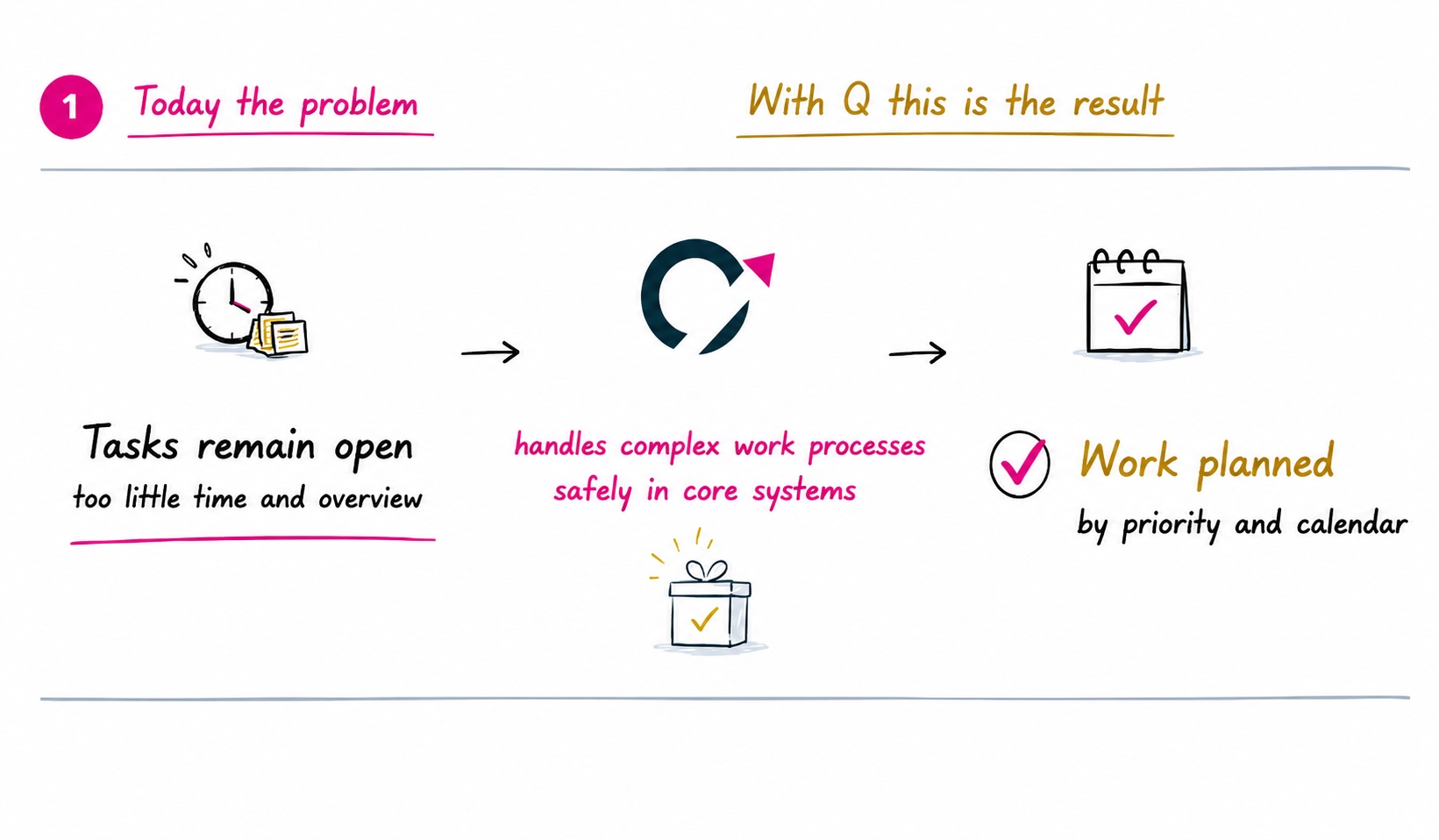
Q identifies what will matter—and brings it to completion.
How Q works
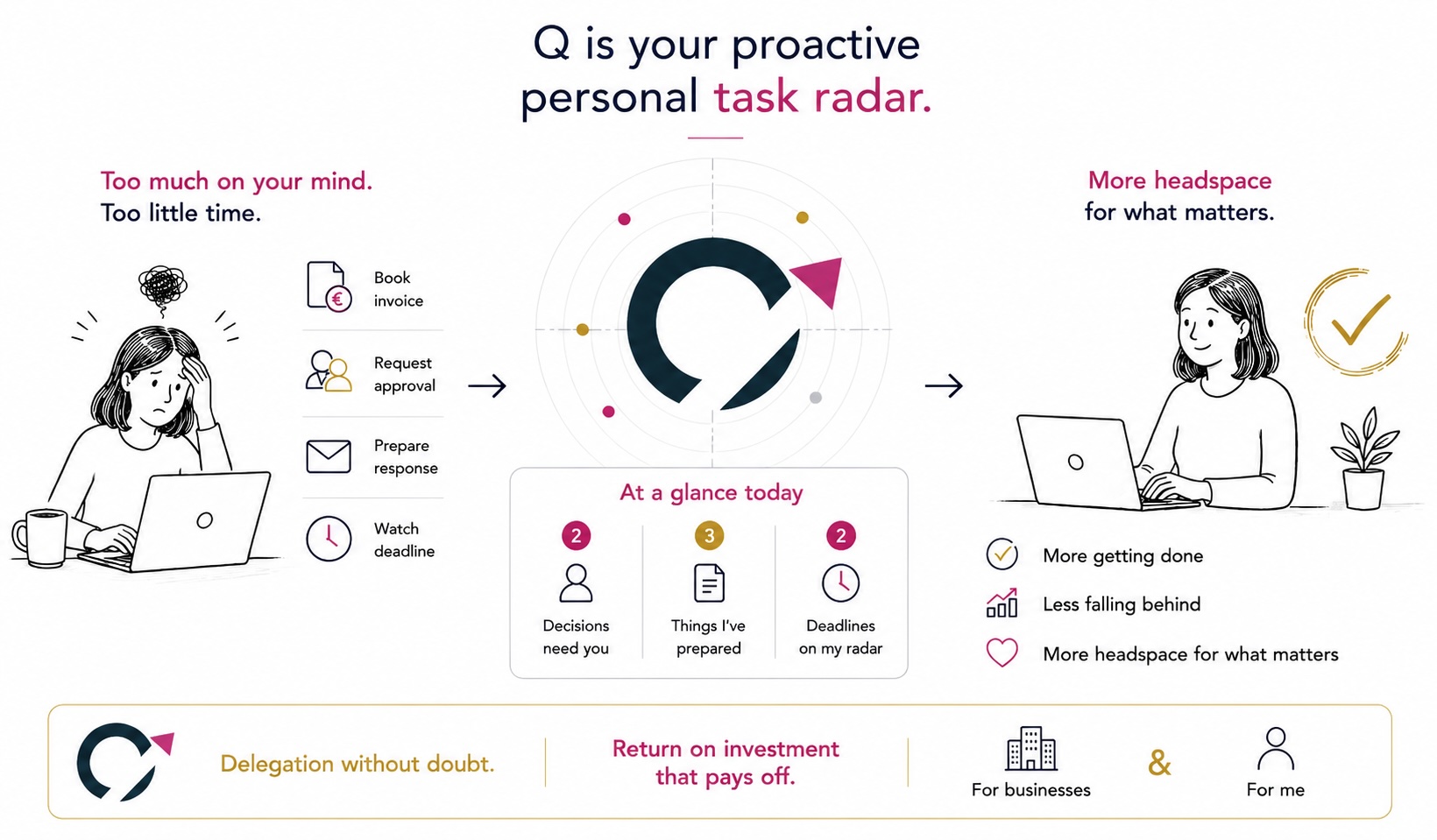
What changes with Q.
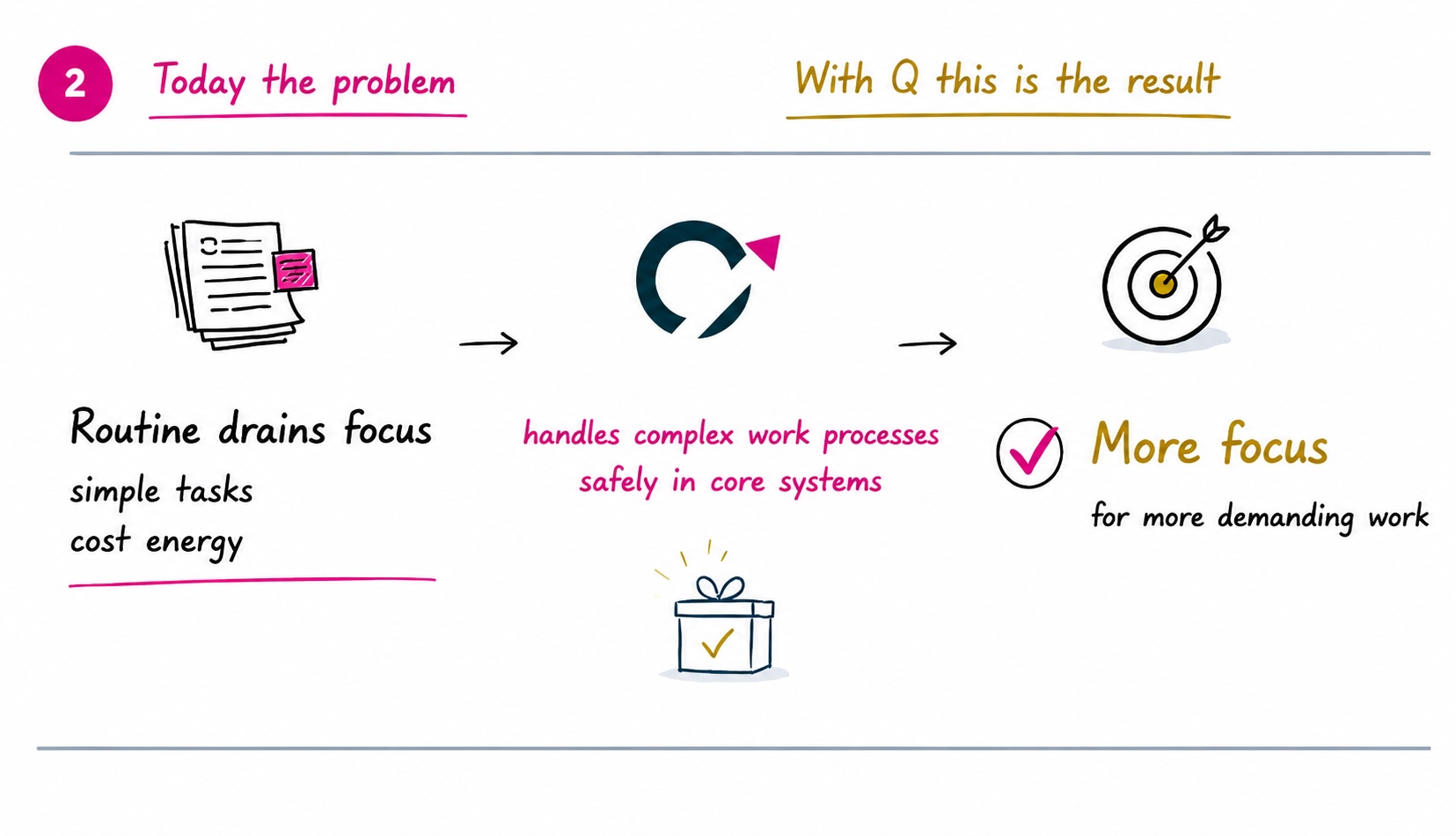
Six examples
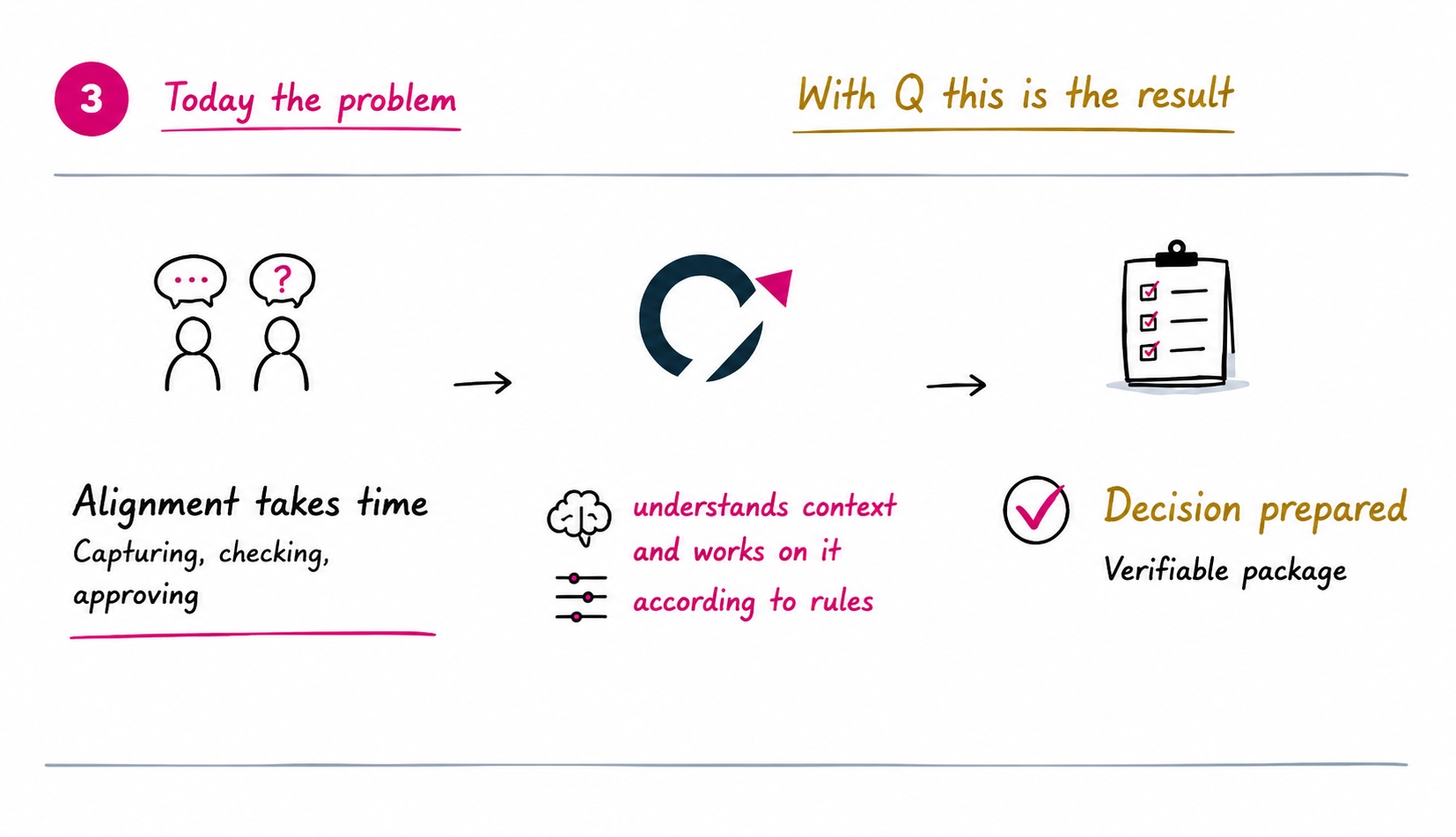
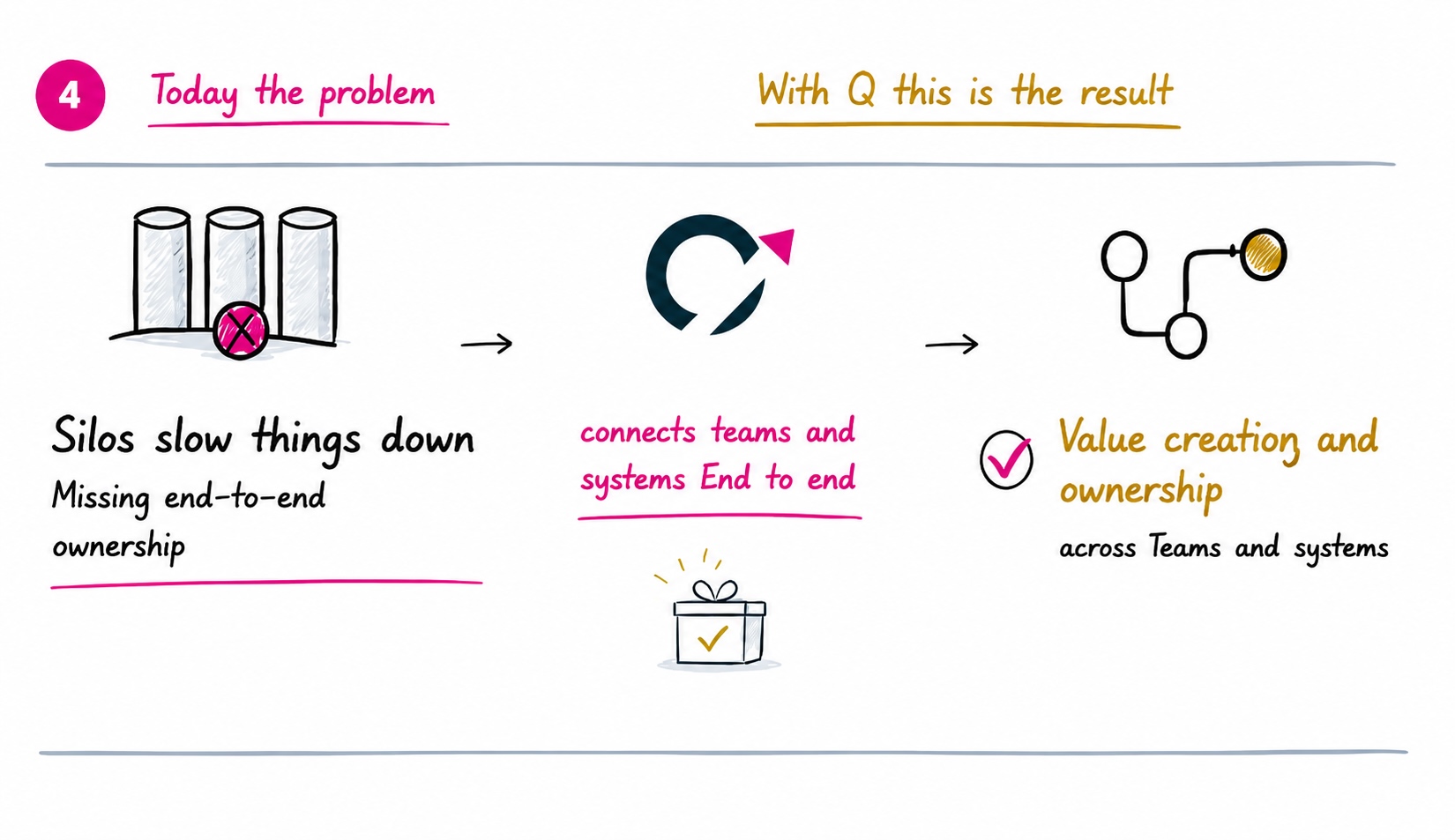
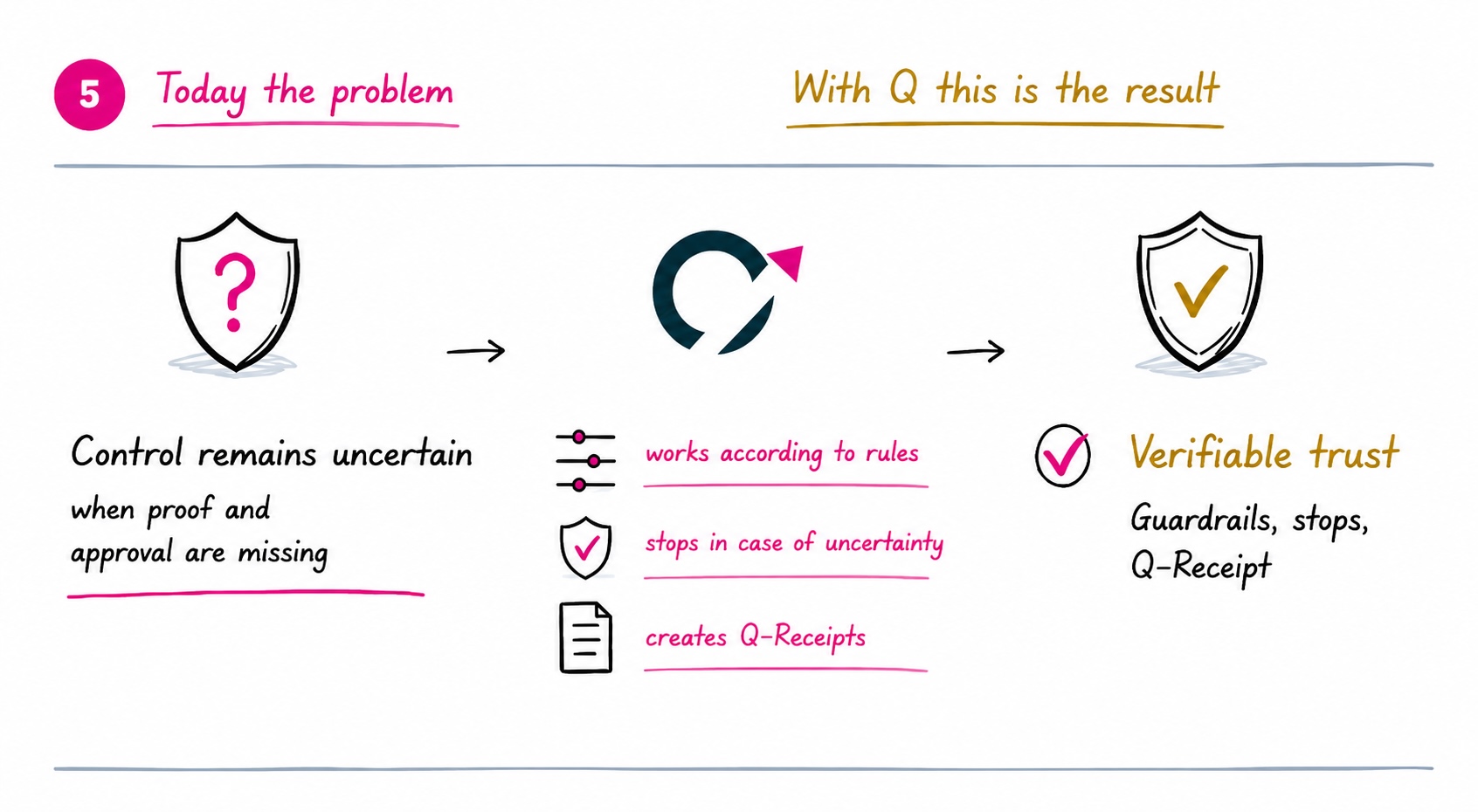
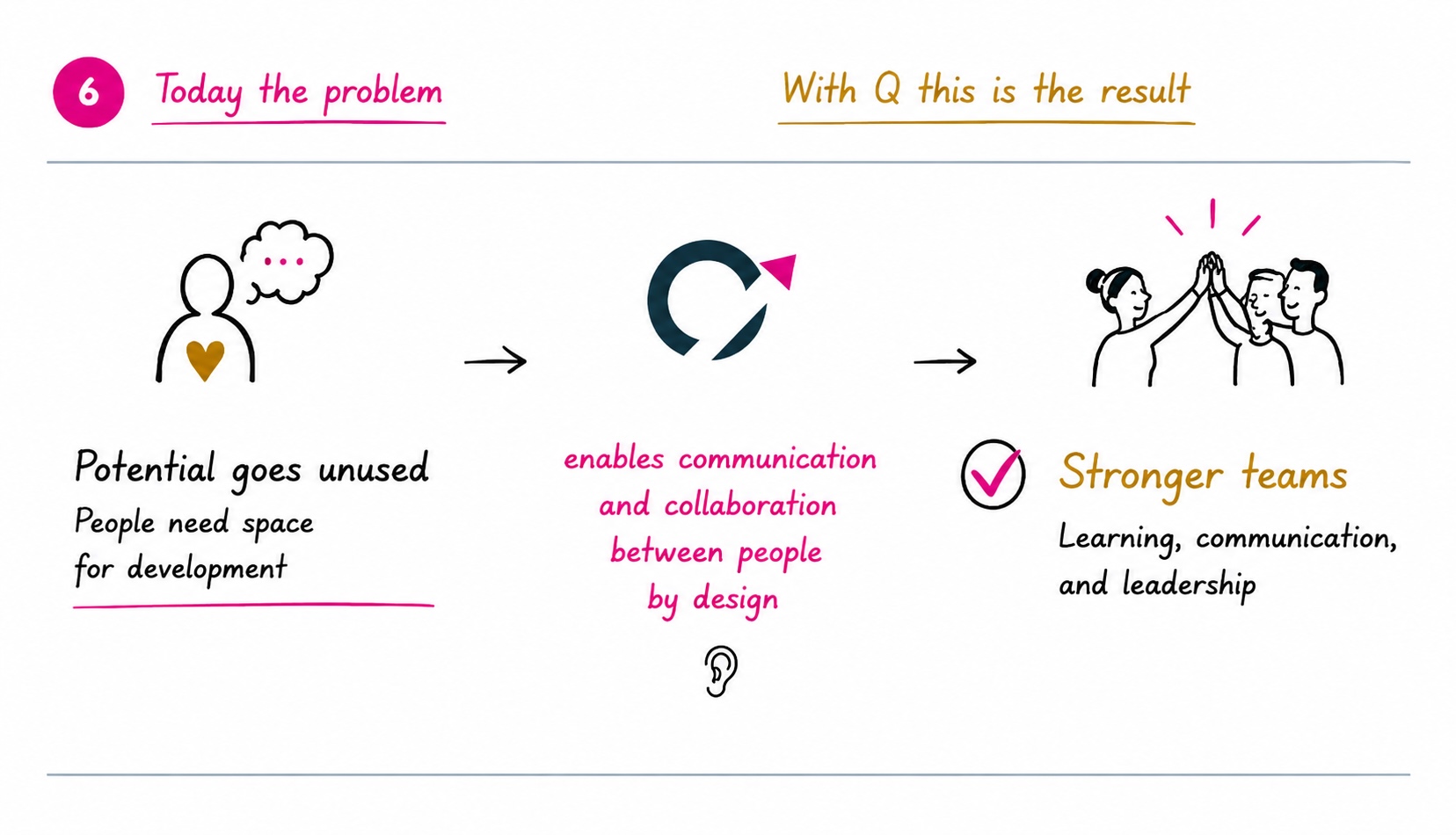
How Q earns your trust.
Trust is good; Q is better.
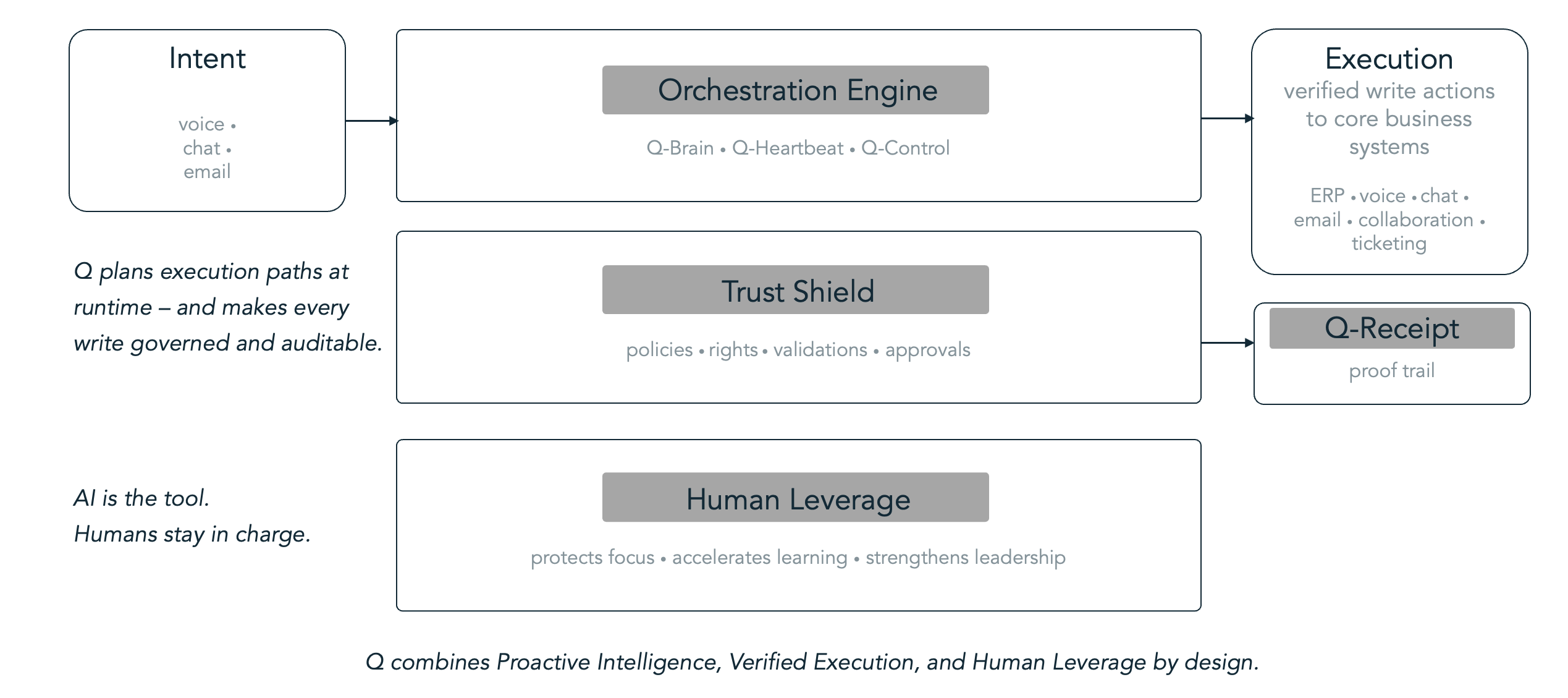
You define which information Q may use and which steps Q may take on its own. When uncertain or faced with important decisions, Q brings you in. Q-Receipts show what Q has checked and completed.
Rules and permissions
Q acts
independently
independently
Human involvement for exceptions
Q-Receipt
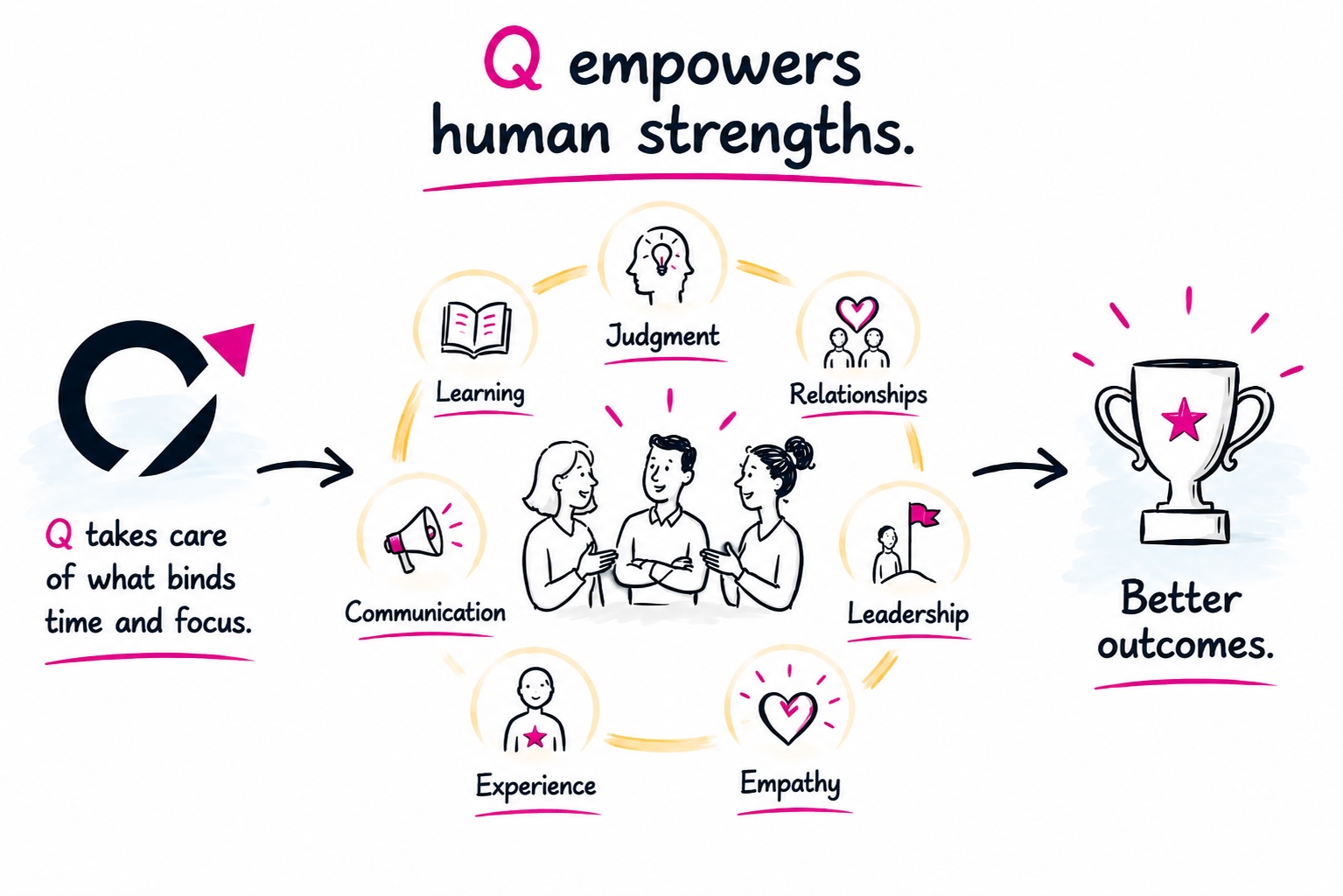
More room for what people do better.
Q strengthens people and teams.
Start where you will notice the difference quickly.
Your first step with Q
Start with a task that repeatedly takes time—and where you can quickly see whether Q genuinely reduces your workload.
Criteria that indicate a good use case for Q.
The same thing, again and again
You or your team regularly carry out similar steps.
Finding information
What you need is spread across emails, documents or different applications.
Chasing things up
You have to remind people, ask questions or check progress until something is truly complete.
When your judgment matters
Exceptions or important decisions require your experience or judgment.
Let's find out whether your task is a good fit.
In 30 minutes, we clarify:
- Where should you start?
- How much effort does the task require today?
- Which parts can Q take care of?
- How will we measure whether it improves?
How a task becomes a completed process.
The Q operating system for AI delegation
Q brings together the information, applications and rules needed for a task. Q handles what it is allowed to do on its own. For exceptions or important decisions, Q brings you in.
Want to understand how Q works in your environment? Talk to us.
Clear answers.
Q in five questions
Q should be easy to understand.
What is Q?
Q is an AI assistant that keeps track of and completes tasks. Q identifies what will matter, brings together the information needed and carries out what Q is allowed to do on its own within the agreed scope. When your judgment matters, Q brings you in.
What makes Q different from ChatGPT?
ChatGPT is a general-purpose assistant for conversations, analysis and content. Q is designed to keep track of tasks and take permitted work through to completion.
What may Q handle on its own—and when does a person decide?
You define which information Q may use, which rules apply and what Q may do on its own. As long as Q can sensibly continue working within this scope, Q acts independently. When uncertain or faced with important decisions, Q brings in the person responsible.
What is a Q-Receipt?
A Q-Receipt is an easy-to-understand record of what Q has checked and completed.
What data may Q use?
Q may only use data and sources approved for the use case. Within that access, Q should only use information relevant to the specific purpose.
Ask Q.
If you want answers right away.
Talk to Q. Around the clock—any time.
Q-Chat is not an LLM; it is a local knowledge base.