
Today
Based on an assumed labor cost of €45 per hour:
€450,000 in manual labor per year
For Businesses
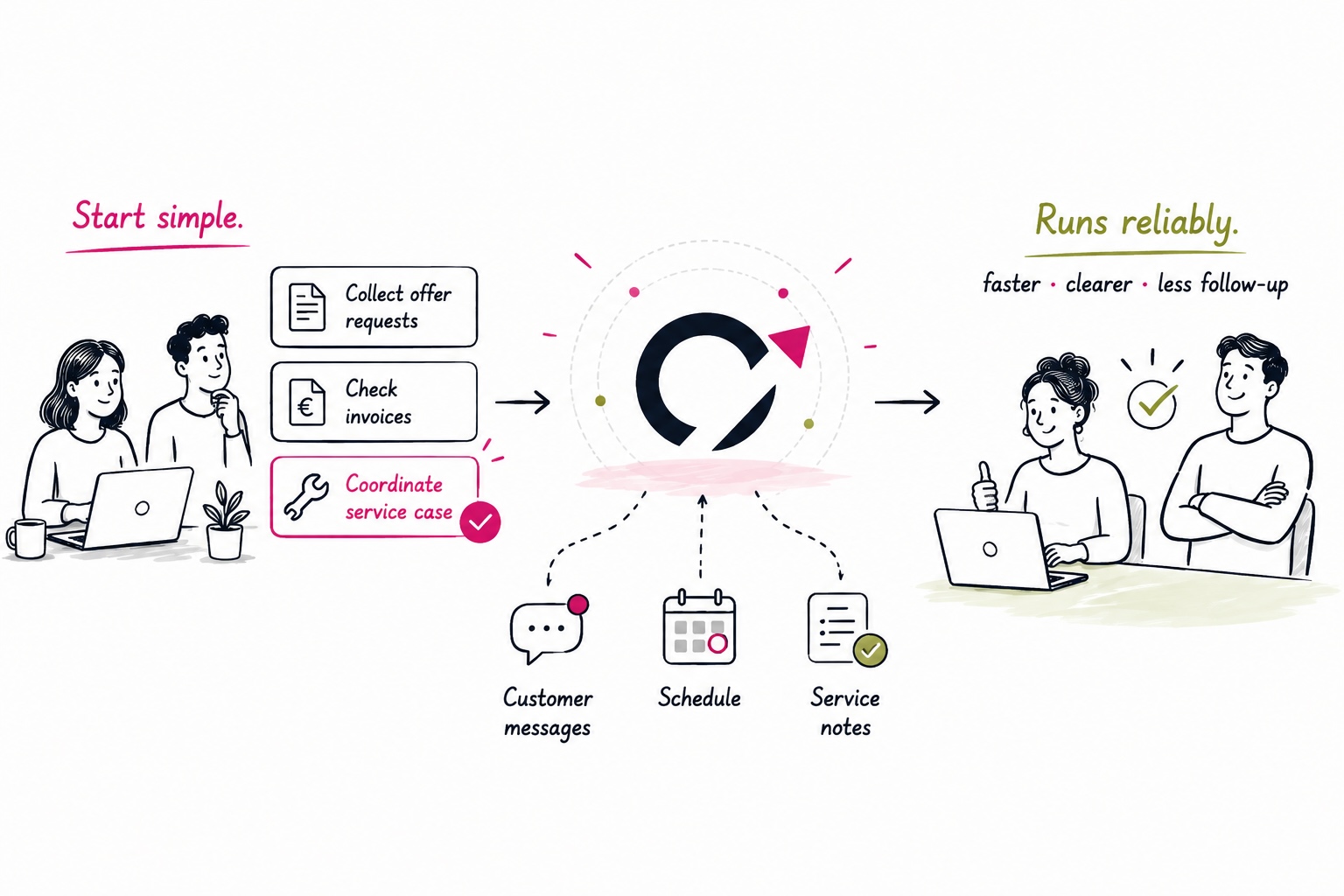
Your team gains time for customers, decisions and leadership. Q takes on operational work and brings tasks through to completion.
What you can expect from Q:
Start simple
Start with a clearly bounded task rather than a large AI project. In day-to-day work, you can see what Q takes on and what actually improves. You can gradually apply what works to other tasks.
Is Q worth it?
An example involving recurring customer and service processes shows the potential a task like this can hold.
Based on an assumed labor cost of €45 per hour:
€450,000 in manual labor per year
Q handles recurring steps, brings together information and keeps processes moving. People remain involved for exceptions and important decisions.
equivalent, based on the calculation, to:
Processing timeLead timeReworkopen processes
Example calculation, not a guaranteed outcome from Q. Assumptions: 20,000 processes/year, 30 minutes of manual effort, €45/hour and 30% less manual effort with Q. The 30% is a Q model assumption. Actual impact depends on the specific Q-Case; released capacity does not automatically result in cost savings. Source for €45/hour: Federal Statistical Office (Destatis), labor costs per hour worked in 2025, Germany.
Stay in control
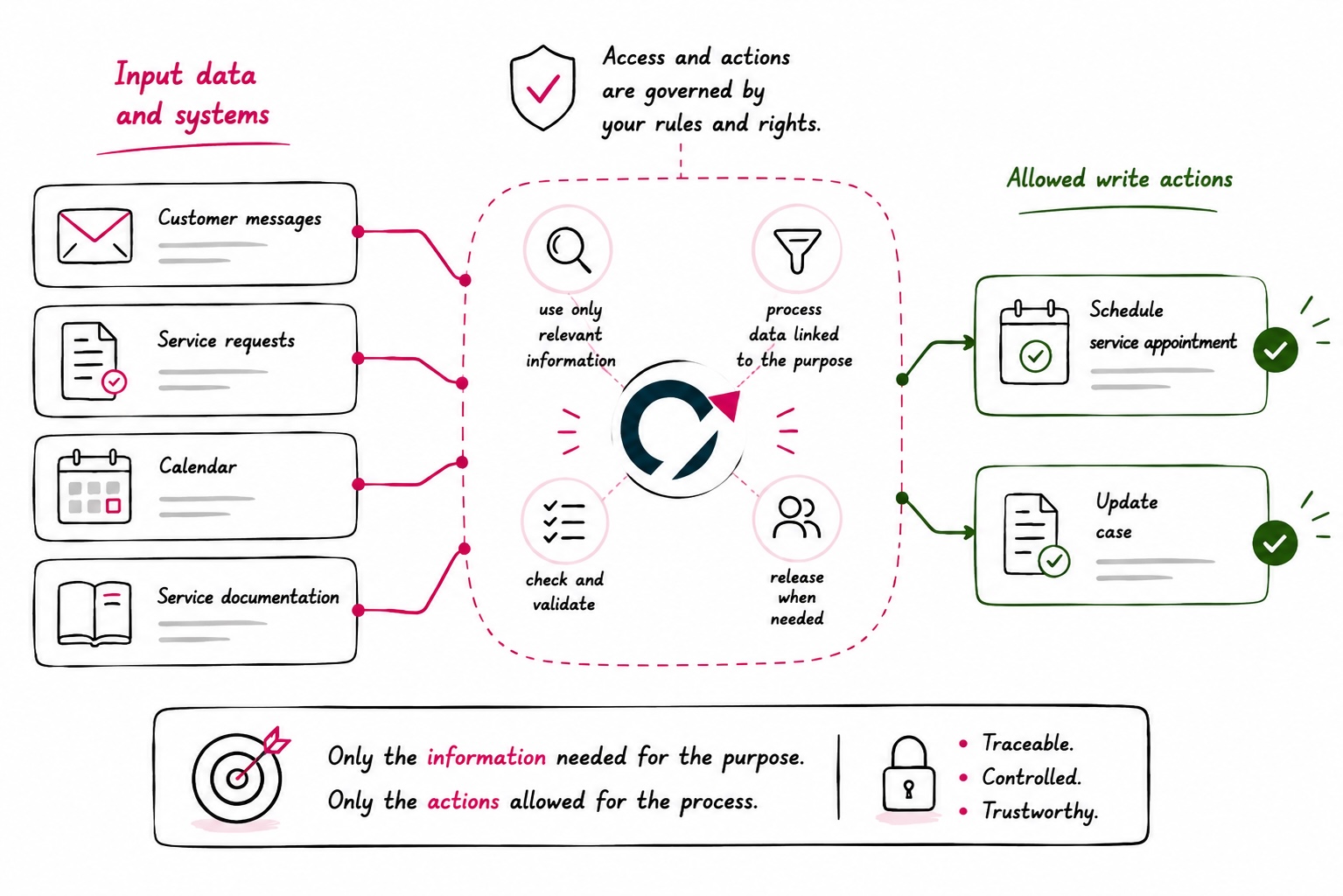
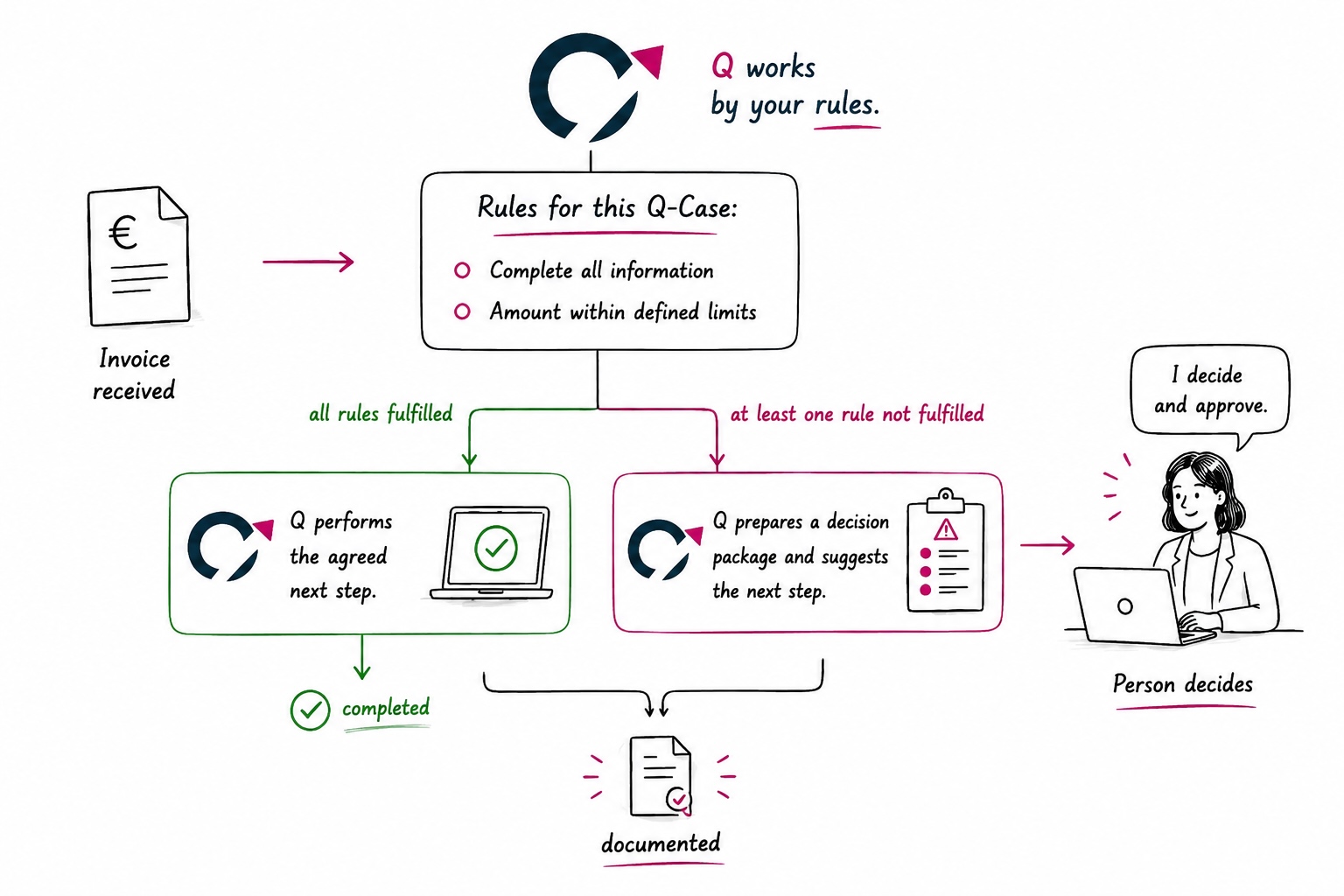
You define which rules apply, what Q may do on its own and when approval is required. When uncertain or faced with important decisions, Q brings in the person responsible. Q-Receipts make relevant checks and outcomes traceable.
Data and actions
You define which data and systems Q may access, what information may be used for and which actions Q may take.
European by Design
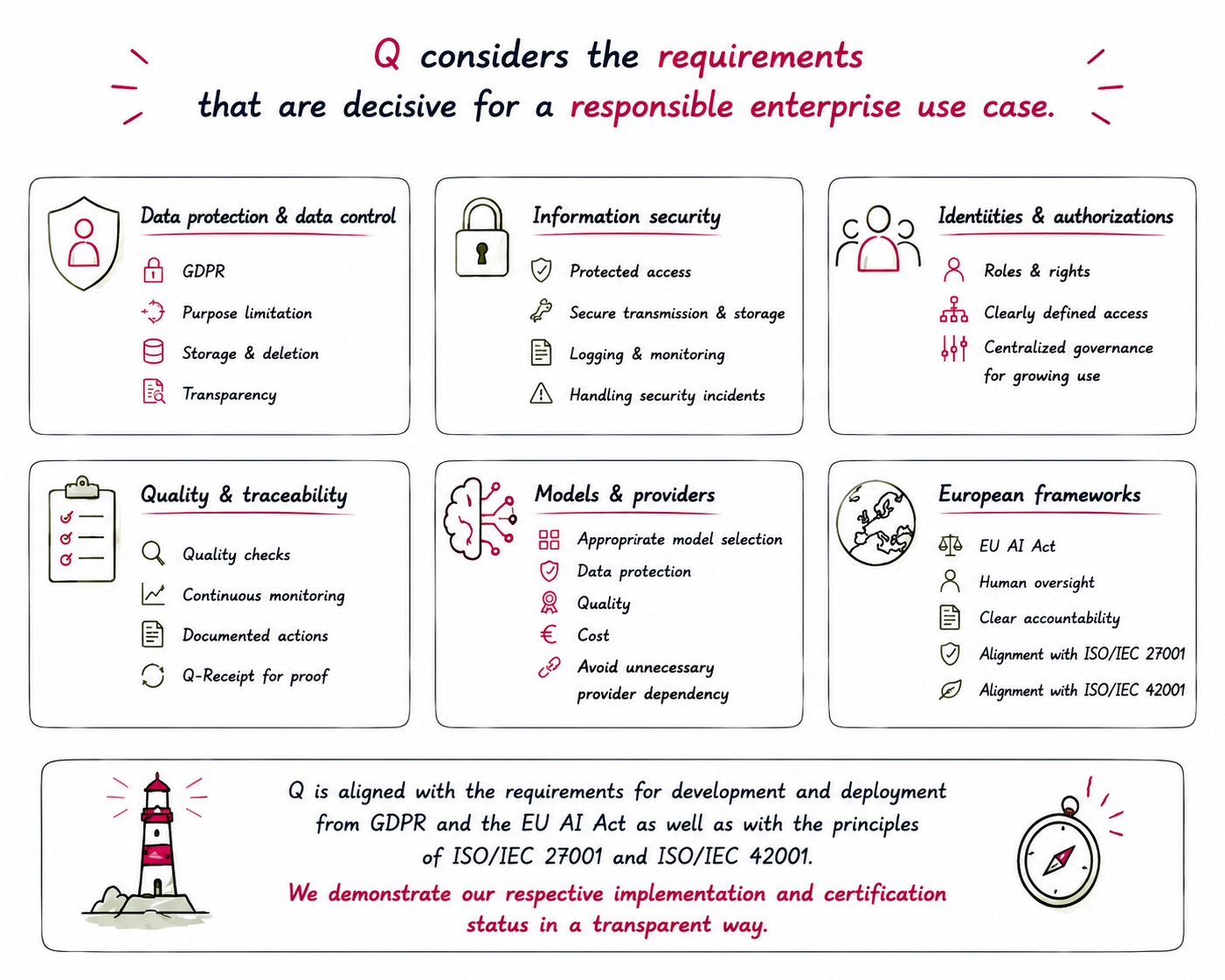
Data protection, information security, identities and permissions, traceability, and choice of model and provider must fit each use case. We transparently state the implementation and certification status.
Why Q
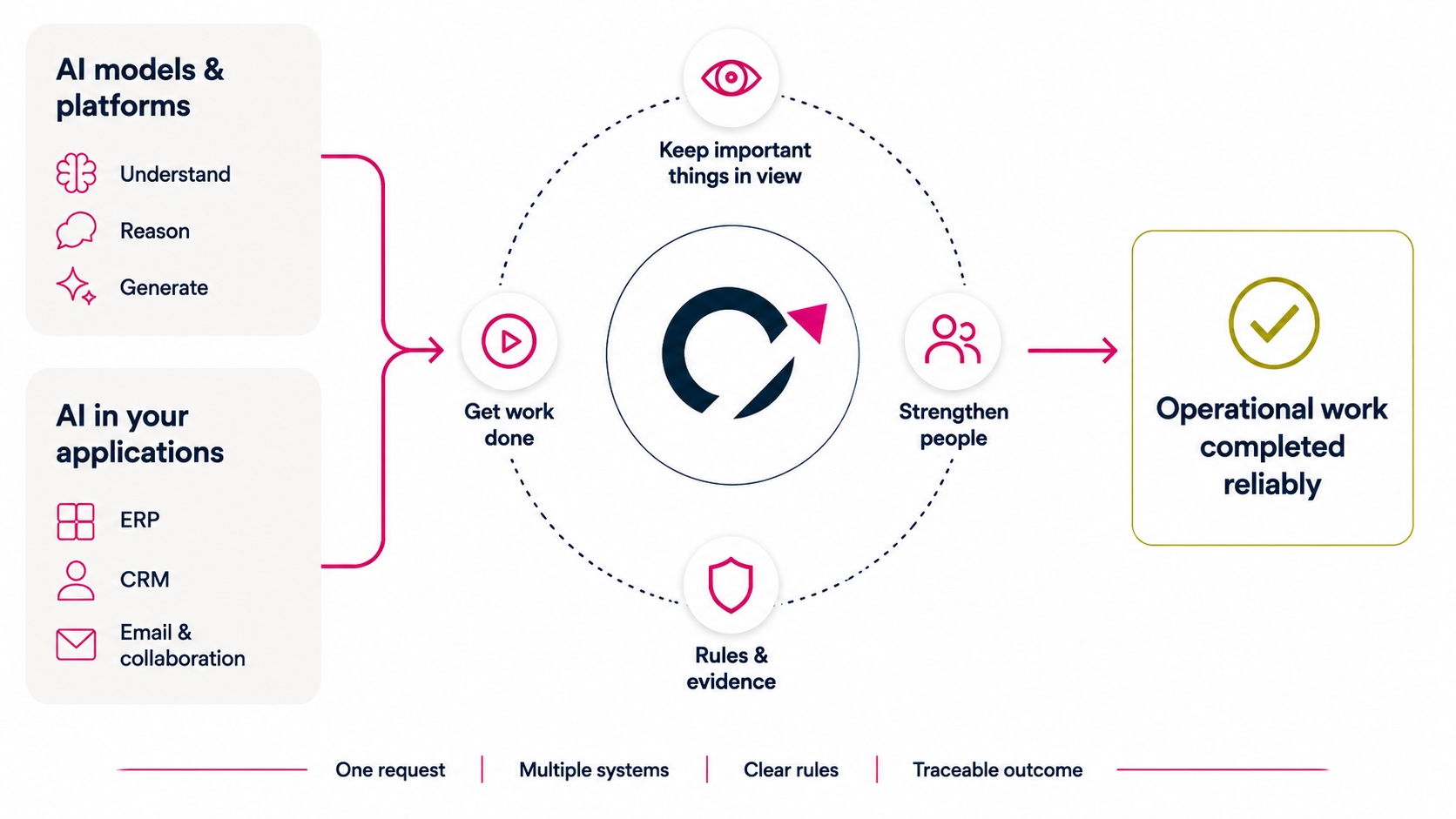
AI models and AI in your applications can already do a great deal. Q complements them where information from several sources comes together, rules apply and work has to continue across multiple steps.
People and teams
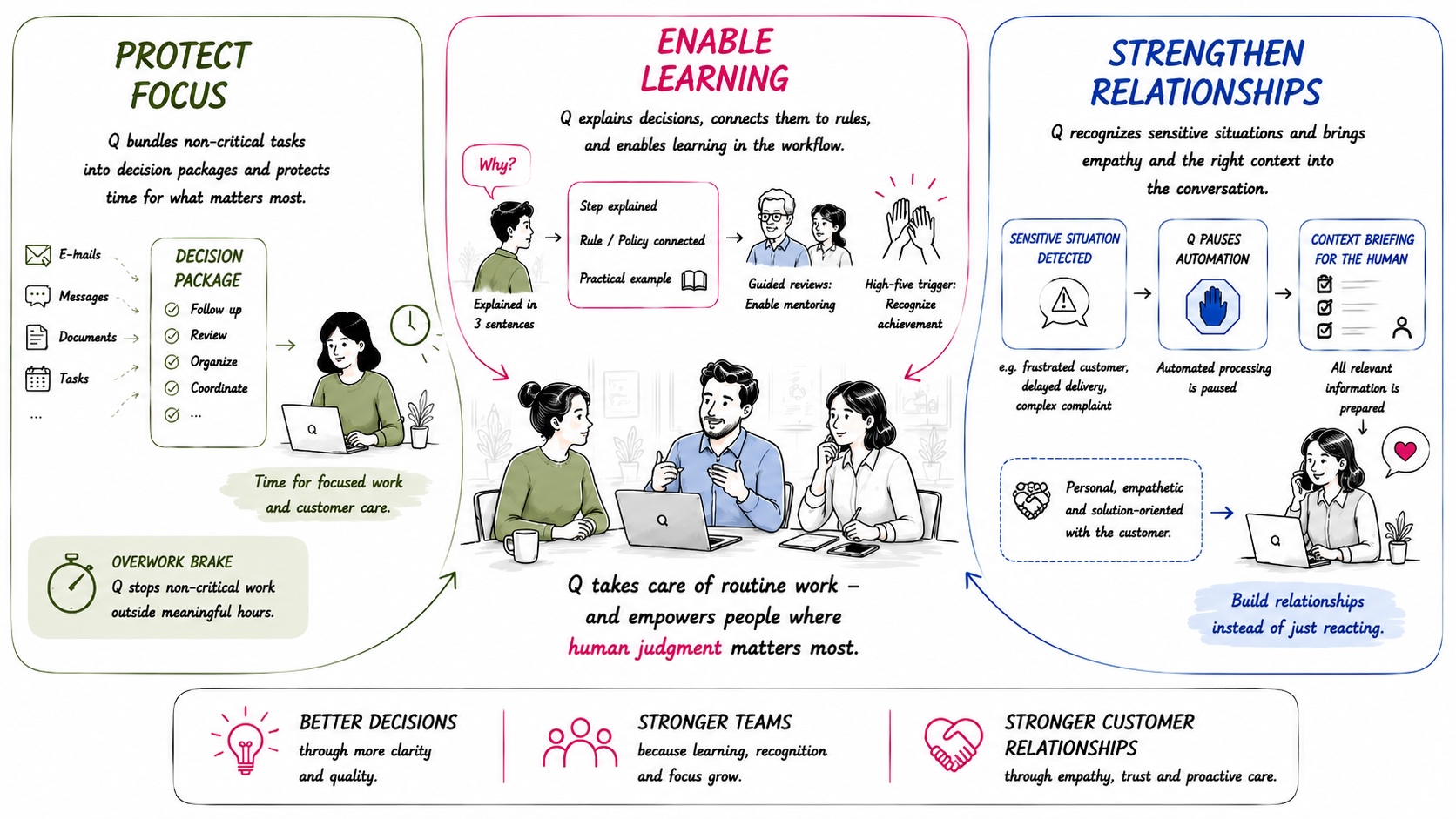
Q takes routine work and follow-up off people's hands. This creates more room for focus, learning and relationships.